-
By Diet@dev
-
18 December, 2025
-
0 Comments
Portion Control Made Easy: How Much Food Is Actually Enough?
“Eat less.”
“Control your portions.”
“Stop overeating.”
It sounds simple—but if portion control were that easy, most people wouldn’t struggle with weight, energy crashes, or blood sugar spikes.
The truth is:
People don’t overeat because they’re careless. They overeat because no one teaches what “enough” actually looks like.
Let’s fix that—without calorie counting, food weighing, or guilt.
Why Portion Control Feels So Hard Today
A few decades ago, people didn’t track macros or calories. Yet lifestyle diseases were far less common.
So what changed?
- Bigger plates and larger serving sizes
- Highly processed, low-satiety foods
- Faster eating and constant distractions
- Stress, poor sleep, and irregular meals
Today, we eat until the plate is empty—not until the body is satisfied.
What Does “Enough Food” Really Mean?
Enough food is the amount that:
- Fuels your body
- Keeps you satisfied (not stuffed)
- Maintains steady energy
- Supports your health goals
It’s not about eating the least possible food.
It’s about eating the right amount for your body.
Why Counting Calories Alone Doesn’t Work
Calories matter—but they don’t tell the whole story.
For example:
- 300 calories of vegetables ≠ 300 calories of sugar
- Calories don’t measure fullness or cravings
- They ignore hormones, stress, and sleep
This is why many people say:
“I’m eating less, but I’m still hungry or tired.”
Portion control works best when quality and balance come first.
The Easiest Portion Control Method (No Apps, No Weighing)
Instead of numbers, use visual balance.
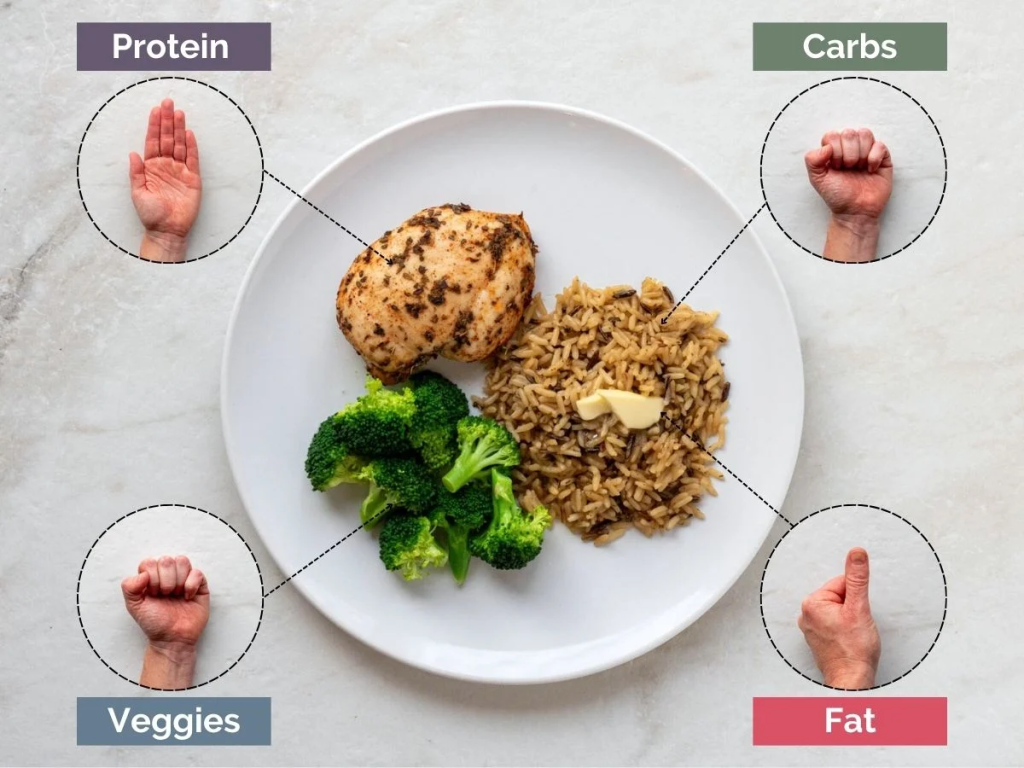
🍽 The Plate Method (Simple & Doctor-Recommended)
For most meals:
- ½ plate → Vegetables & fiber-rich foods
- ¼ plate → Protein (dal, paneer, eggs, fish, chicken)
- ¼ plate → Carbohydrates (rice, roti, millets)
- 1–2 tsp → Healthy fats
This method naturally:
- Controls portions
- Balances nutrients
- Reduces overeating
Why Protein Is the Key to Feeling “Enough”
Protein directly affects fullness.
When protein is too low:
- Hunger returns quickly
- Cravings increase
- Portion control becomes harder
When protein is adequate:
- You stay full longer
- Blood sugar stays stable
- Total food intake reduces naturally
This is why “eating less” without protein almost always fails.
Hunger vs Habit: Learn the Difference
Not all eating is hunger-based.
Before eating, ask:
- Am I physically hungry—or just bored or stressed?
- Would I eat fruit right now?
If the answer is yes, it’s real hunger.
If the answer is no, it’s emotional or habitual eating.
Recognizing this alone can dramatically reduce overeating.
How Much Food Is Enough for Weight Loss or Health?
There’s no universal portion size—but there are clear signals.
You’re eating enough when:
- You stop at 80% full
- You don’t feel heavy or sleepy after meals
- You don’t crave sugar within an hour
- Your energy stays steady
Satisfied—not stuffed—is the goal.
The Biggest Portion Control Mistake Most People Make
Skipping meals.
Skipping meals leads to:
- Stronger hunger later
- Larger portions at night
- Poor food choices
Regular, balanced meals help you eat less overall—without trying.
Why Stress and Sleep Affect Portion Sizes
Stress and poor sleep:
- Increase hunger hormones
- Reduce fullness signals
- Increase cravings for quick carbs
That’s why portion control isn’t just about food—it’s about lifestyle.
How Technology Can Make Portion Control Easier
Modern AI-powered nutrition tools help by:
- Suggesting portions based on your body
- Adjusting meals as your weight or activity changes
- Removing daily decision fatigue
Instead of guessing, you get guided consistency.
How DietIQ Makes Portion Control Practical
DietIQ focuses on:
- Portion guidance, not restriction
- Balanced meals, not extremes
- Foods you already eat
- Continuous adjustments based on progress
The goal isn’t to eat less forever.
It’s to eat right—consistently.
The Takeaway
Portion control doesn’t mean eating tiny meals.
It means:
- Eating enough to feel good
- Stopping before discomfort
- Matching food to your body’s needs
Enough food is not a number—it’s a state of balance.